Concrete Slabs in Burnley
Concrete slab installation for outbuildings, workshops, stores, utility areas and small extension floors — prepared from the ground up. Northern Grit Concrete works across Burnley and nearby East Lancashire areas on domestic and small commercial projects where appropriate.
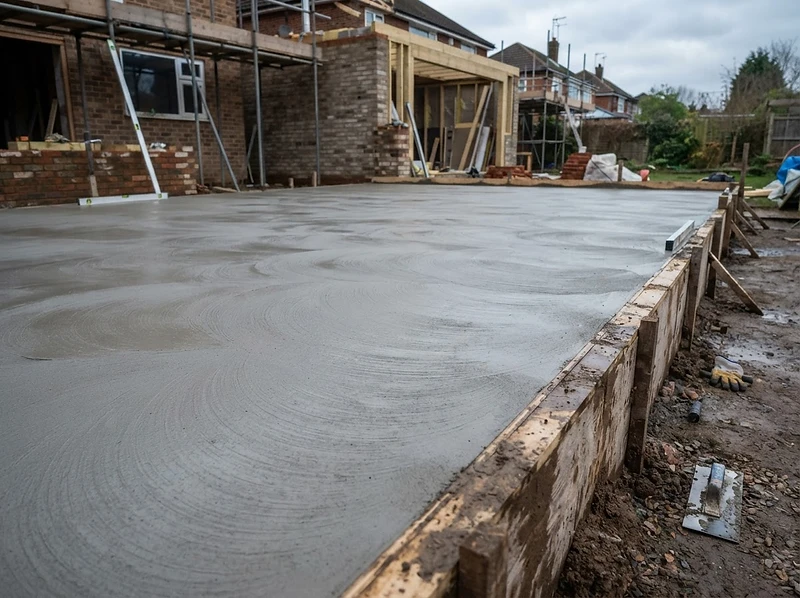
What slabs are used for
A slab is simply a flat area of concrete laid on a prepared, compacted formation. What changes between jobs is the thickness, reinforcement, drainage and finish — all decided by what the slab has to do.
- —Outbuildings and stores
- —Workshops
- —Storage and machinery areas
- —Small extension floors
- —Garden buildings
- —Utility and bin areas
- —Wide paths and access strips
- —Hardstanding areas
Excavation and sub-base
Turf, topsoil, roots and old surfaces are taken out to the required depth. Soft spots and made-up ground are dealt with rather than covered over.
Crushed stone is then laid in layers and compacted to form a firm, even formation. This is the part that carries the slab, so it is not rushed.
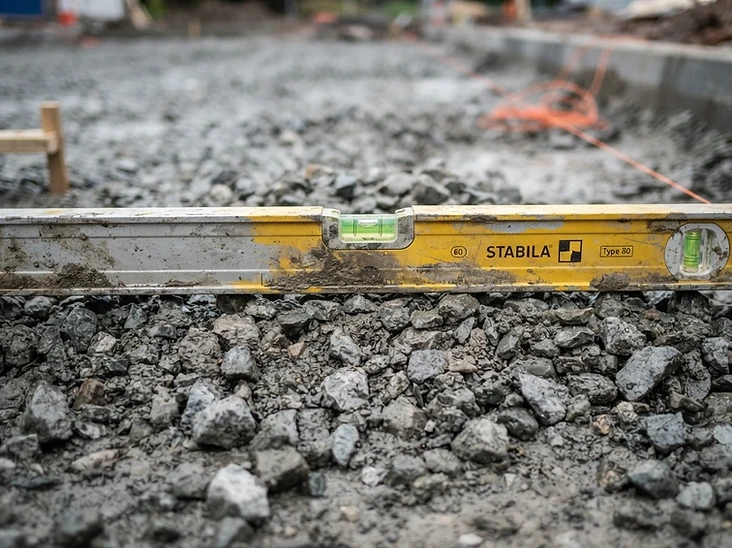
Membranes and reinforcement
A damp-proof membrane is installed where the design or specification calls for it — typically under floors inside a building. Reinforcement such as mesh or bar is used where the load, span or structural requirements call for it.
Neither is applied automatically. Both are decided against the intended use of the slab.
Slab thickness, reinforcement and preparation depend on the intended load, ground conditions, drainage and any structural or supplier requirements.
Shuttering, depth and joints
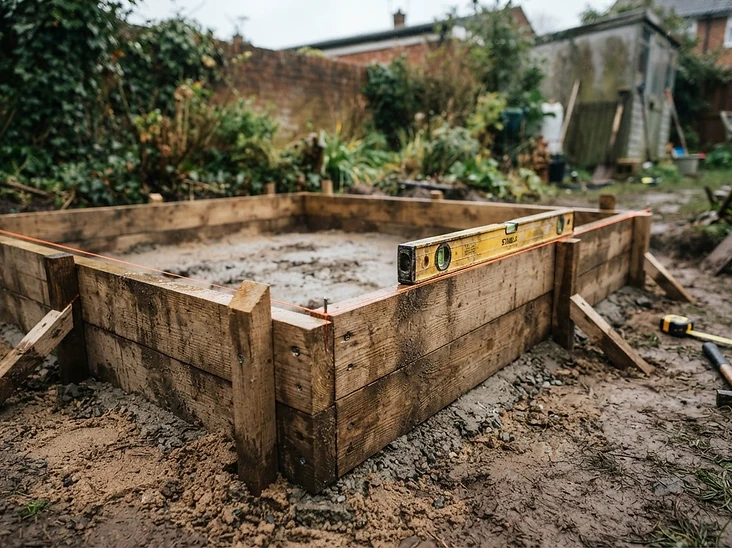
Timber shuttering holds the slab to size and thickness with straight edges. On larger areas, joints may be formed or cut to control cracking — where they go depends on the shape and size of the pour.
Levels and falls are set before any concrete arrives.

Finishes
Inside a building, a smoother float finish is usually wanted. Outdoors, a brushed or tamped finish gives grip in wet Lancashire weather. The finish is agreed before the pour so there is no surprise on the day.
Curing and access
Concrete gains strength over time, so a slab should be left before it is loaded or built on. We explain what to allow for your job.
Access affects how concrete and materials are brought in. Barrow runs, side paths and rear alleys are all workable, and machine access may be considered depending on the site and project.
Cost factors
- —Area in square metres
- —Slab thickness
- —Excavation depth and spoil
- —Removal of existing surfaces
- —Reinforcement and membrane
- —Drainage, falls and edge details
- —Finish required
- —Access and waste removal
Related Work
- Concrete BasesPrepared and installed bases for sheds, garages, garden buildings and outbuildings.
- Concrete HardstandingBin areas, stores, machinery and access areas in plain concrete.
- Foundations & FootingsTrench excavation and concrete footings worked from your plans.
- Domestic GroundworksClearance, excavation, levelling and sub-base work around the home.
- Concrete RemovalBreaking out old bases, slabs and paving before new work.
- Areas CoveredBurnley, Padiham, Nelson, Colne, Brierfield and nearby areas.
- Contact Northern Grit ConcretePhone, email and how site visits are arranged.
Questions
Frequently Asked Questions
Get a Slab Priced Properly
Send your postcode, the rough area, what the slab is for and a photo or two. We will explain the preparation involved.