Concrete Hardstanding in Burnley
A hard-wearing concrete area for the parts of a property that take a hammering — bins, stores, machinery, workshop access and standing areas. Prepared and installed across Burnley and nearby East Lancashire areas.
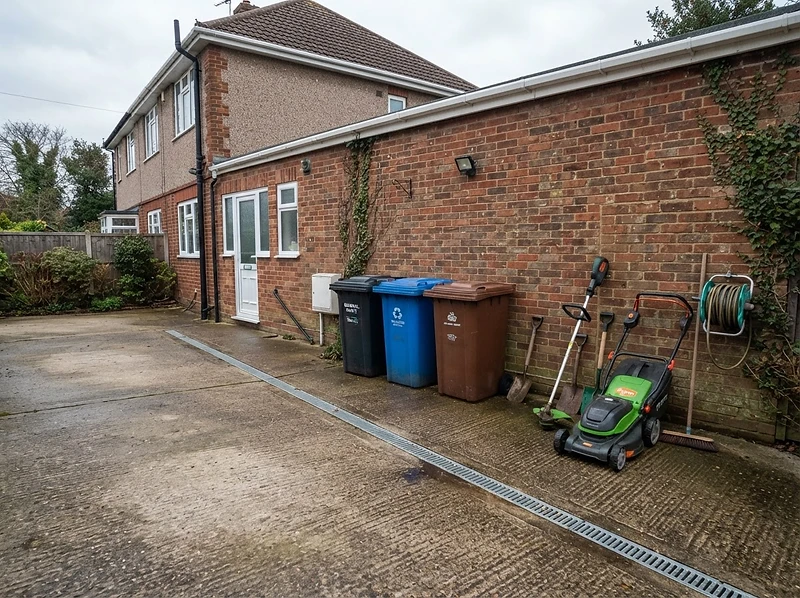
Typical uses
Hardstanding is simply a durable, well-drained concrete surface. What varies is the thickness, reinforcement and drainage, all of which follow from how the area will actually be used.
- —Storage areas
- —Bin areas
- —Garden machinery standing
- —Workshop surrounds and doorways
- —Parking or access areas where suitable
- —Trailer and equipment standing
- —Small commercial or yard areas where genuinely appropriate
Intended load comes first
A bin standing area and an area a loaded trailer is reversed onto are different jobs. Before pricing, we need to know what will sit on or drive over the concrete and how often.
Where a use involves heavy or repeated loading beyond ordinary domestic use, that needs discussing honestly — including whether a structural design is appropriate for the project.
Thickness, reinforcement and preparation depend on the intended load, ground conditions and drainage. Heavier or unusual loading may require a specific design.
Base construction
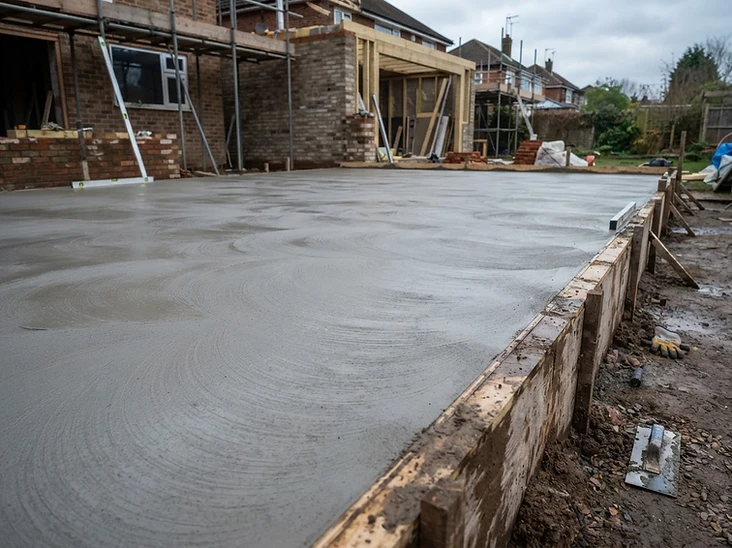
The area is excavated, soft spots dealt with, and crushed stone sub-base laid in layers and compacted. Shuttering is set to line and level, with reinforcement where required, before the concrete is placed.
Edges are worth attention on hardstanding, since they take knocks from bins, barrows and wheels.

Drainage and falls
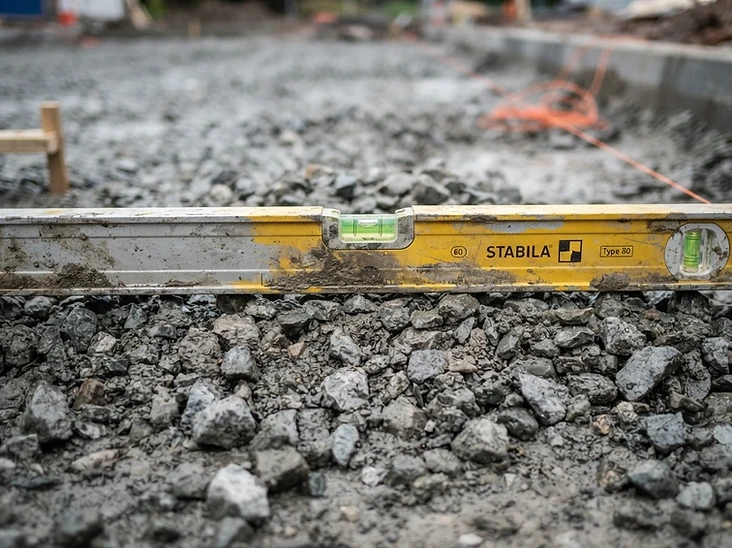
Water has to run somewhere sensible — away from house walls, doorways and boundaries. Falls are set as part of the levels, and existing gullies or channels are worked in where present.
Surface water drainage requirements vary by project and should be confirmed where the area is large or connects to existing drainage.
Surface finish
Outdoors, a brushed or tamped finish is usually the sensible choice — it gives grip when wet, which matters in this part of the country. A smoother finish can be used where the area is sheltered or under cover.

Access
Hardstanding is often at the side or rear of a property. Access affects material handling and the concrete placement method, so a photo of the route is genuinely useful. Machine access may be considered depending on the site and project.
Cost factors
- —Area in square metres
- —Intended load and thickness
- —Excavation depth and spoil
- —Existing surface removal
- —Reinforcement requirements
- —Drainage and falls
- —Edge and kerb details
- —Access and waste removal
Related Work
- Concrete SlabsSlabs for workshops, stores, utility areas and small extensions.
- Concrete DrivewaysPlain and reinforced driveways, including replacing old concrete.
- Domestic GroundworksClearance, excavation, levelling and sub-base work around the home.
- Concrete Paths & PatiosGarden paths, side access and hard-wearing patio areas.
- Concrete RemovalBreaking out old bases, slabs and paving before new work.
- Areas CoveredBurnley, Padiham, Nelson, Colne, Brierfield and nearby areas.
- Contact Northern Grit ConcretePhone, email and how site visits are arranged.
Questions
Frequently Asked Questions
Tell Us About the Area
Send your postcode, the rough size, what will sit on or drive over it, and a couple of photos. We will explain the preparation needed.